

Are Dissimilar Metals & Chemical Incompatibility Wreaking Havoc on Your Project Vehicle?
DSPORT Issue #248
Text by Michael Ferrara // Photos by Joe Singleton
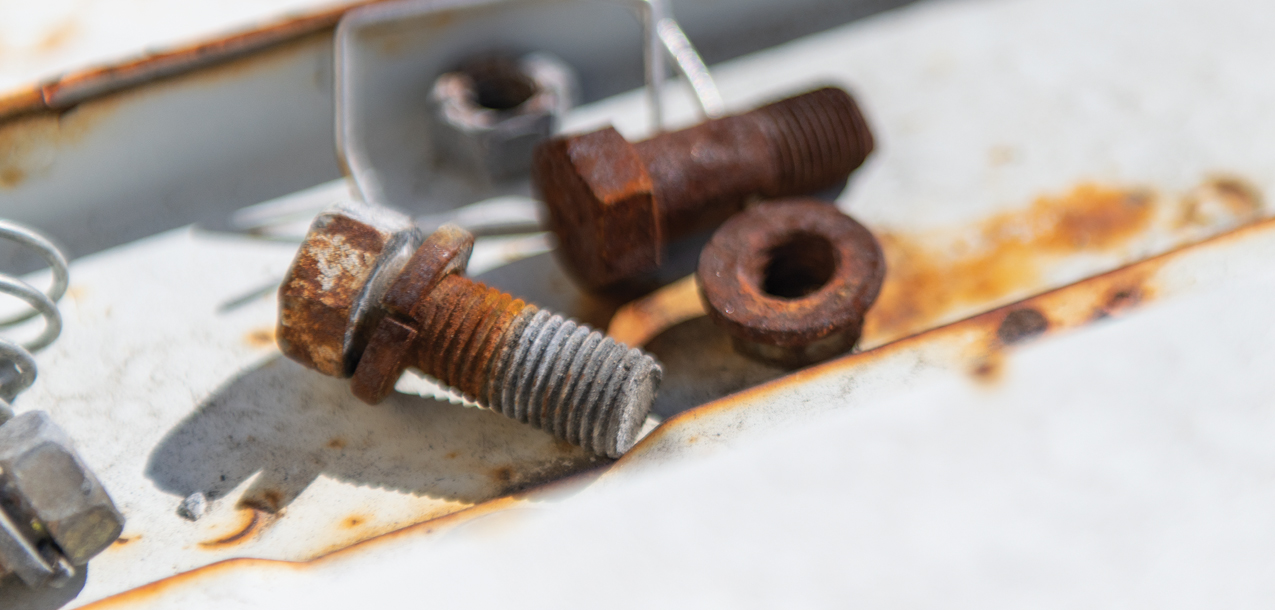
Rust. It’s an enemy of project cars exposed to the elements. While different regions of the USA are more likely to turn your steel and cast-iron into rust, there is no location that isn’t susceptible. Those living where snowy winters feature salted roads, where tropical humidity keeps everything from drying or where salty ocean air is in the breeze are aware of the powerful mechanisms of corrosion. While ferrous materials such as steel and cast-iron provide that reddish brown stain identifying the reaction, corrosion can occur in many different types of metals. Many times, the corrosion isn’t as visually obvious as rust on steel or verdigris (that green corrosion) on copper alloys. Understanding how corrosion occurs is key to developing a strategy to keep your vehicle corrosion free. Knowing where corrosion can occur is also paramount to forming a solid plan of action. Finally, learning how to prevent or avoid situations that accelerate corrosion provide establish the foundation for addressing the issue.
What is Corrosion
When metal transitions from its refined or manufactured state to an oxide, hydroxide or sulfide state corrosion is occurring. Once a metal corrodes to these states, the resulting oxide, hydroxide or sulfide has extremely weak mechanical properties. Ferric Oxide or rust as it is better known, doesn’t have anywhere near the strength properties of cast iron or steel. While you would break your hand trying to put through the steel floorboard of a car, it would be easy to punch through a floorboard if it had been turned to rust.
Corrosion can sometimes be surface and have a mostly cosmetic effect while other times it can run deep and affect the structural integrity of a component. Flash corrosion can occur when washing unpainted parts while more severe corrosion is usually the result of a part being in a corrosion environment for a longer amount of time.
Where Does Corrosion Occur
Exposure to certain chemicals or dissimilar metals in a moisture rich environment will induce corrosion. If you remember from your high school chemistry class the “LEO says GER,” you may recall that you Lose Electrons during Oxidation and that you Gain Electrons during Reduction. With corrosion the oxidation reaction is occurring on the metal experiencing the corrosion. When a salt or some other chemicals are present with moisture, an electrolyte is created that allows the electrons to flow at a higher rate thus increasing the rate of corrosion. When you have moisture and exposure to air together, you’ll have an environment for rust. Add some salt to the situation and now you got a breeding ground for rust.
Not All Metals Created Equal
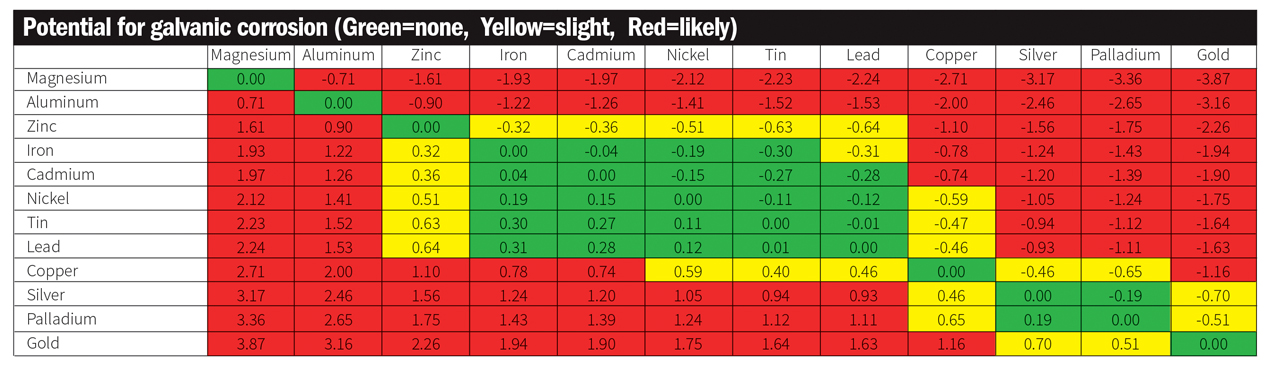
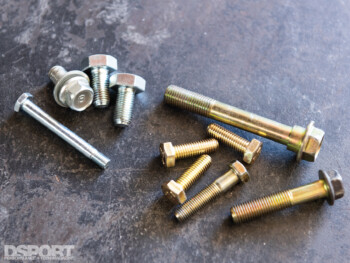
Different metals react differently when paired together when there exists a conductive path for electrons and ions. The combination of some metals will accelerate corrosion while the pairing of other metals will cause little or no galvanic reaction. Using 410-grade stainless steel fasteners in aluminum threads will cause accelerated corrosion if moisture and air is present (especially is salts are in the mix too). When dissimilar metals are paired, one of the metals will sacrifice itself and corrode while the other will be protected from corrosion. You may have noticed that many fasteners are zinc plated or cadmium plated. The reason is that both zinc and cadmium tend to be the sacrificial material when corrosion occurs which keeps the main fastener material from corrosion issues. While titanium is a highly reactive metal, the oxides that quickly form on titanium provide a non-conductive insulator that prevents corrosion from occurring.
If you look at a galvanic chart and find two materials to have a seemingly bad pairing, always do a bit more research to see if one of the materials will have a barrier present that would slow or eliminate corrosion. For example, charts might say titanium exhaust bolts are a bad idea with an aluminum cylinder head, but the fact that the titanium bolt has a barrier of oxide means that its compatible with just about anything.
Barrier Coatings
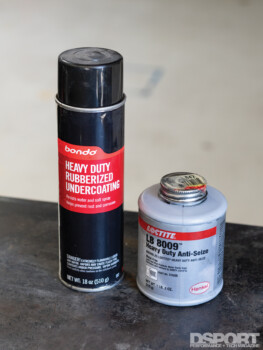
While some fasteners may be plated with a sacrificial coating to reduce corrosion of the core fastener material, having a barrier that blocks the conductive path for electrons can also be effective. Using non-conductive washers and anti-seize lubricants can protect fasteners from galvanic corrosion in many circumstances. Rubberized undercoatings can also form a barrier that keeps salts and moisture away from metals.
Cooling System Compatibility
One issue that can plague vehicles is the abundance of electrolytes and dissimilar materials in an engines cooling system. Fortunately, copper-alloy radiators are only found on classic vehicles and most modern engines are aluminum alloy like the radiator. A few cast-iron engine blocks are still in production too. The key here is to use a coolant that is compatible with all the materials in a vehicle’s cooling system. Using older technology coolants or coolant additives that aren’t friendly too the materials in the cooling system can cause extreme corrosion.
Zinc Sacrificial Anode
While I have yet to see a cathodic protection system applied in an automotive application, but in theory it could work well. The systems are usually based upon sacrificial zinc being in contact with other metals to protect the other metal. In marine applications, these systems protect just about every system on a boat with a bonded network of connections. If you lived in an area where metals are prone to corrosion, attaching some “zincs” in the right places could keep your engine block, cylinder head or even car frame from corrosion. You’ll know how well your system is working by how fast the sacrificial metal (zincs) get eaten away.
The Bottom Line
If you live in an arid, dessert like area, you probably see minor issues with corrosion. If you live in areas where there are four seasons, high humidity or salt is used to melt the snow, corrosion is a real issue. Finding “rust-free” project cars is often not possible in these areas. Understanding what causes corrosion, where to look for corrosion and how to prevent corrosion can help you preserve your project car for generation to come.
