

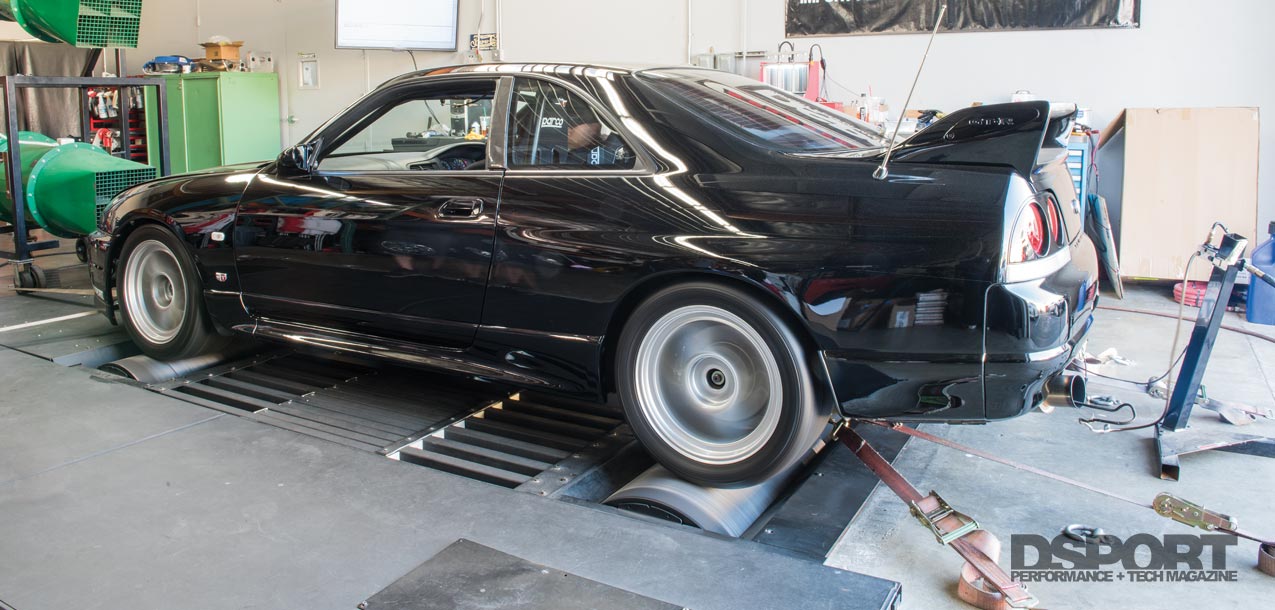
There are more tuning solutions available for more performance platforms than ever before. The majority of today’s ECUs can be re-flashed to potentially maximize the performance and reliability of a stock, mildly-modified and sometimes even highly-modified engine. A proper “tune” or ECU calibration will result in the ideal ignition timing, boost control and fuel delivery for a given engine and fuel-system combination. Unfortunately, the quality of the tune is dependent upon the capabilities of the tuner and the condition of the multiple systems on the engine and vehicle. Getting an off-the-shelf “tune” for your vehicle can sometimes work just fine while other times may put your engine in the fast lane on the highway to Hell. Investing the time and money into a proper dyno and dyno tuning session for your engine is the best way to know just how good or bad your engine is running.
Street Tuning/Logging
While there is merit in logging your engine parameters while driving under normal conditions to verify proper air-fuel ratios and ignition timing in the real world, the street isn’t the right place to be making full-throttle passes in multiple gears to tune the engine. To get the necessary data on the street, a vehicle must accelerate under full throttle exceeding speed limits and putting the driver and other cars on the road in danger. However, accelerating in any gear with wide open throttle is exactly what a chassis dyno allows. Fuel curves, ignition curves and boost curves can be precisely dialed at wheel speeds approaching 200MPH with the vehicle stationary. It’s safer, quicker and more controlled to use a chassis dyno to tune as much as possible (likely 90-95% of the calibration) while data from street driving under normal conditions or data from a few passes at the racetrack can fill in the rest.
Need to Dyno?
What vehicles will benefit from a trip to the dyno? An argument can be made for every car to see benefits with a trip to the dyno. In addition to being a tuning tool that streamlines the ECU calibration process, a chassis dyno can also be used as a diagnostic tool. If the dyno facility has a large database of dyno runs, it is often possible to compare your engine’s output to others with the same or similar performance upgrades. If your engine needs to run an additional 5 or 6psi of boost pressure to equal another similar engine with the same turbo, you can start looking for an issue that wasn’t obvious. Even if you have a “forever vehicle” that you plan to leave completely stock over its lifetime, getting periodic dyno tests can let you know the condition of the engine.
For anyone getting an off-the-shelf, custom E-tune or an in-person tuning session of a factory or aftermarket ECU, the dyno should be considered a must. Take the time to have the dyno facility fit your enigne/vehicle with as many sensors as possible. Most chassis dynos can simultaneously record boost pressure and air-fuel ratio. Some can even interface with your OBD-II computer to simultaneously log additional channels. While some dyno facilities may charge an additional hookup and/or per hour charge for the additional data channels, it’s well worth the expense. After all, you may learn that you have a bad or lazy O2 sensor or that your boost pressure is much higher or lower than what your gauge is showing.
Are you Ready?
“Preparation is the key to success” holds true for dyno sessions. While you may think only rookies show up to a dyno session with the car not ready to dyno, we’ve seen some of the most seasoned race teams have the occasional brain fart that results in paying for dyno time while wrenching on problems that could have been solved before hitting the dyno. To avoid wasting money and getting the most from your dyno tuning session, we’ve put together the ultimate pre-dyno checklist. Follow along for big power with no whammies.
The Checklist
#1. Know the Goals
#2. Know the Limits
Your engine, clutch, transmission, differential(s), fuel system and turbocharger all have a limit in terms of being able to produce or survive a certain power and or/torque level. On the engine, connecting rods and head gasket(s) are usually the weakest link. Too much cylinder pressure will produce too much torque and the connecting rods will bend or the combustion seal from the head gasket will be sacrificed. Do some research and find out what the accepted limit is for those OEM components before you inadvertently go beyond these limits and cause major damage. The clutch, transmission and differential(s) will also have a maximum torque level that they will be able to survive. The OEM often uses the torque capacity of the OEM clutch to act as a fuse so that it slips before damage is done to the transmission or differentials. However, it’s easy to upgrade the clutch to hold more torque and if the transmission and differential(s) are pushed beyond their limits, serious damage can occur.
As for the fuel system, the injectors and pump(s) will only be able to support a set amount of horsepower for a given fuel. The higher the ethanol percentage of the fuel, the more fuel that will be required for a given horsepower level. For the same horsepower level, the injectors and fuel pump will need to supply 42 percent more fuel for E85 than for E10 gasoline. Also, it’s important to remember that as boost pressure is increased, the horsepower potential of the fuel pump is decreased.
#3. Fresh Engine Oil and Filter
A chassis dyno session is going to subject the engine to maximum load and engine speeds. To be sure that the engine oil has the highest level of protection, it is a good idea to change the engine oil and filter before hitting the dyno. Using a high-quality synthetic engine oil of the proper viscosity will provide the maximum engine protection.
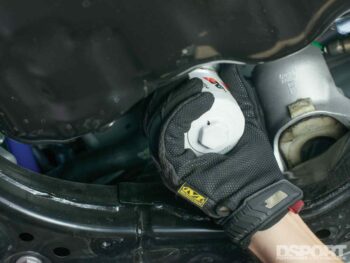
#4. Check Engine Oil Level
Be sure that the engine oil level is between the minimum and maximum levels set by the dipstick or engine oil level indicator. Too low of an oil level can result in oil starvation and a drop in oil pressure that can cause bearing failure. Too high of an engine oil level can cause oil frothing or foaming which prevents the oil from functioning properly. Excessively high levels can also cause leaks and excessive crankcase pressure.
#5. New Spark Plugs
One of the most common issues experienced on the dyno are misfires. The most common culprits are the spark plugs. Sometimes the wrong spark plug is installed and other times the spark plugs are worn. The variations between different spark plugs can seem minute with multiple plugs being able to “fit” in a particular cylinder head. However, a plug that fits may have an incorrect gap, incorrect heat range or incorrect nose or insulator length. Under light loads, the plug may function without issue. Under heavy loads, the incorrect plug can result in misfires or pre-ignition. It is best to pick the premium Iridium plug for your application in the original or colder heat range. Most Iridium performance plugs will cost from $10 to $15 each while dedicated racing plugs can easily run up to $50 each.
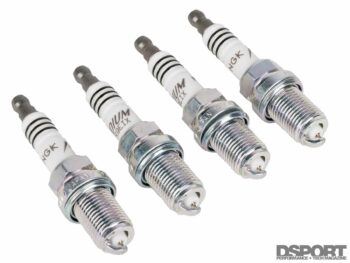
#6. Gap it Right!
OEM specified spark plug gap specs are good for OEM performance levels. Elevated boost levels increase the voltage requirements for a spark to occur. As a result, smaller than OEM spark plug gaps are often required to avoid misfires. For high-boost levels, some ignition systems may require spark plug gaps closed down to 0.020” or even as small as 0.014”.
#7. New Fuel/Enough Fuel
Depending on the surrounding conditions, fuel quality can begin to deteriorate in as little as a month. If a project car has been sitting around for months or years, heading to a dyno with a tank full of old fuel is a recipe for disaster. Drain or pump out as much of the old fuel as possible and dispose of properly. If you are bringing a car that you regularly drive with fresh fuel in the tank on a regular basis, just make sure you have a full tank so you don’t run out of fuel on the dyno.
#8. Secondary Fuel and Fuel Containers
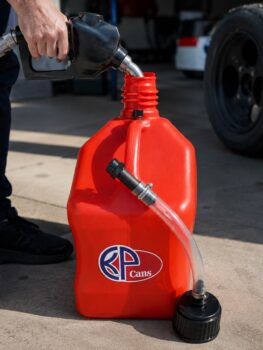
If you have a vehicle set up for flex fuel, you will need to have enough pump gas (E10) and enough E85 to properly tune the engine. Be sure to speak to your tuner and find out how much of the secondary fuel will be needed. Bring at least that amount plus a few empty fuel containers to store the surplus of the primary fuel that is remaining after the tuning of the system with the primary fuel.
#9. Ignition Timing Setting/Syncing
Before performing any tuning session, it is important to verify that the ignition timing is set correctly. On factory ECUs, the ignition timing should match the factory specification. On aftermarket ECUs, the timing showing on the indicator must match the timing on the standalone ECU.
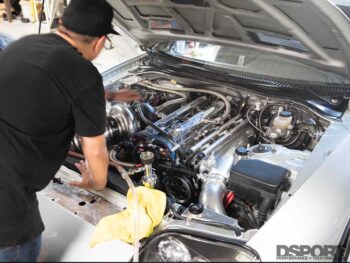
#10. Check for Boost Leaks
While some boost leaks are tough to find, a simple inspection of all of the couplers and clamps can usually locate the majority of leaks or potential leaks. Boost leaks can limit the amount of boost that can be produced and can also cause the turbo shaft speed to run in an overspeed condition and potentially damage the turbo.
#11. New fuel filter and Clean fuel injectors
While many newer vehicles lack a serviceable fuel filter, many older vehicles have a serviceable fuel filter. When these filters are not replaced within the recommended service interval they can act as a serious restriction to fuel flow. Check to see if your vehicle has a serviceable fuel filter and replace it with a new OEM filter before hitting the dyno. As for the injectors, sending them out for a cleaning service before hitting the dyno is a good idea if they have been in use for more than a year or two. If the injectors are relatively new, running an over-the-counter pour-in-the-tank injector cleaner on the tankful of fuel before the dyno is a good measure.
#12. No Check Engine Lights
There is no value in trying to dyno tune a vehicle while the check engine lights are on. Many ECUs run in an altered or “limp home” mode when check engine lights are illuminated.
#13. Proper Wastegate Spring/Actuator
If you show up to the dyno with the wrong wastegate spring in your wastegate or the wrong actuator for your integral-gated turbo, you’ll be wasting your time on the dyno. If the spring or actuator is rated for a higher than desired boost pressure, the boost pressure will be higher than your desired level. When the boost is running too high, you’ll cut your dyno tuning short.
If the wastegate spring or actuator is set to a boost pressure level lower than the lowest desired boost level, you will be leaving performance on the table versus getting a spring or actuator that is set to deliver minimum boost without a boost controller. For example, if you want to run a minimum of 15psi or boost pressure but you have a 10psi wastegate spring, you will lose performance even if you have a boost controller that raises the boost up to 15psi (with the 10psi spring).
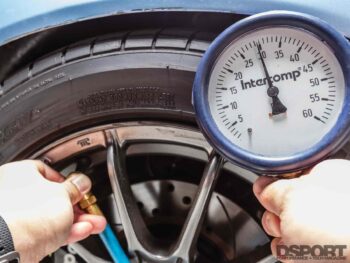
#14. Equalize Air Pressure in Tires
All the drive tires must be the exact same size (circumference or rollout measurements) and filled to the same pressure so that the rollout is identical on all of the drive tires. For FWD vehicles, both front tires must be the same size and inflated to the same pressure. Same is true for the rear tires on a RWD tire. On an AWD car, all four tires must have the same circumference and be inflated to the same pressure.
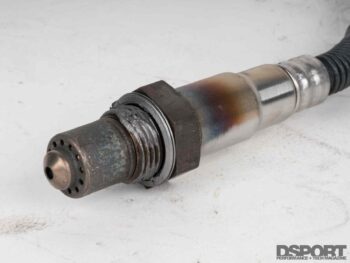
#15. Fresh O2 sensors
Most modern ECUs rely upon the oxygen sensors for closed-loop lambda correction under just about every driving condition including wide open throttle. If the oxygen sensors are old or have been contaminated with lead from racing fuel, the sensors may not respond quickly to changes in air-fuel ratio or they may read incorrectly. Tuning with old O2 sensors can result in unsafe air-fuel ratios that can limit performance or cause engine damage. To ensure the best results, make sure the O2 sensors are new.
#16. No Coolant Leaks and Proper Coolant Level.
A pressurized test of the cooling system is the best way to check for coolant leaks. Perform this test after properly filling and “burping” the cooling system.
#17. Know the Pedal Dance
Some newer vehicles require a set sequence of pressing buttons or pedals in order to enter a “dyno mode” for the vehicle. Failure to do this correctly, may cause the vehicle to enter a “limp” mode when attempting to complete a dyno run.
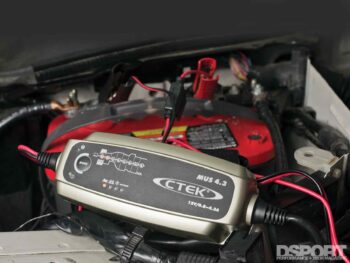
#18. Fully-charged battery/Working Alternator
The fuel injectors and ignition coils undergo corrections when operating voltages change. When a battery is not already fully charged and/or the alternator isn’t functioning properly, the operating voltages may be different than standard operating voltages. To avoid any possible issues, fully charge the battery the night before the dyno session and check that the charging voltage from the alternator is within the OEM specs.
#19. Individual EGT Sensors
For high-horsepower race engines, individual EGT sensors on each cylinder are the best way to pinpoint a failing injector or an issue with a specific cylinder. EGT sensors can also be used to help establish adequate ignition timing advance. Some tuners can mistakenly run too little ignition timing advance thinking it is “safe” when in actuality running excessively high EGT that can cause burnt up exhaust valves and cracked exhaust manifolds.
#20. Verify all Inputs/Outputs on Standalone ECU
After installing a standalone ECU, it is important to verify that all of the sensor inputs are correctly assigned with the proper scaling. Monitoring each of the channels while unplugging each sensor one at a time is a time-consuming, but valuable assignment that can save major headaches in the future.
Pre-Dyno Checklist
1. Know the Goal
2. Know the Limits
a. Fuel Injectors
b. Fuel Pump(s)
3. Oil Change
4. Check oil levels
5. New Spark Plugs
6. Proper Spark Plug Gap
7. New Fuel/Enough Fuel
8. Secondary Fuel and Fuel Containers
9. Ignition Timing Setting/Synching
10. Check for Boost Leaks
11. Clean fuel filter and fuel injectors
12. No Check Engine Lights
13. Proper Wastegate Spring
14. Equalize air pressure in all drive tires
15. Fresh O2 sensors
16. No coolant leaks and proper coolant level
17. Know the Pedal Dance
18. Fully charged battery and working alternator
19. Individual EGT Sensors
20. Verify all Inputs/Outputs (New Stand- Alone ECU).
| ECU Calibration Methods | |||||
|---|---|---|---|---|---|
| Live Dyno | Remote Dyno | Live Street | Street e-tune | Blind Faith | |
| Measures Wheel Horsepower | Yes | Yes | No | No | No |
| Tuner Sees Live Data | Yes | Limited | Yes | No | No |
| Tuner Sees Live Situation | Yes | No | Yes | No | No |
| Tuner Hears Live Situation | Yes | No | Yes | No | No |
| Tuner Feels Live Situation | Yes | No | Yes | No | No |
| Tuner Smells Live Situation | Yes | No | Yes | No | No |
| Secondary Sensor Logging | Possible | Possible | No | No | No |
| Session Avoids Possibility of Collision | Yes | Yes | No | Mostly | Yes |
| Minimizes Possibility of Engine Damage | Yes | Somewhat | Mostly | No | No |
| Avoids Getting Tickets w/tuning | Yes | Yes | No | No | Yes |
| Potential for Maximum Performance | Yes | Very Likely | Not Likely | Not Likely | No |
| Allows Comparison to Other Vehicles | Varies | Varies | No | No | No |