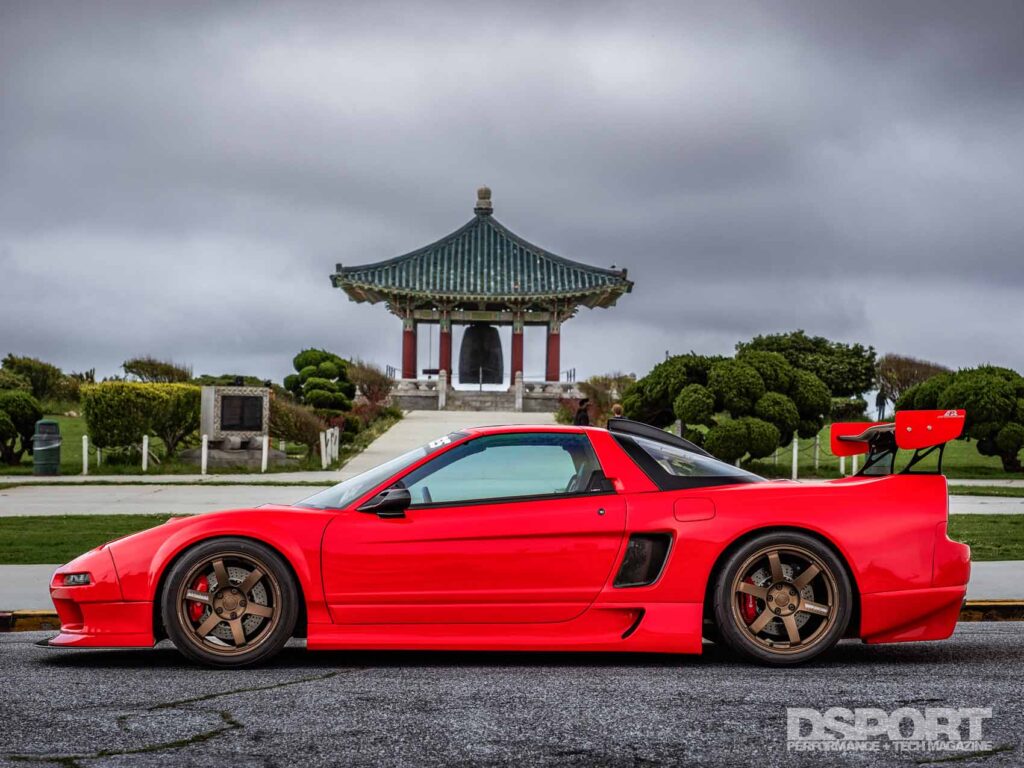

When Honda made the New Sportscar Experimental vehicle available for sale in the United States under the premiere Acura nameplate, it set a bar high up toward supercar territory that left many filled with desire. The “big six” VTEC engine from the camp that was making four-bangers popular was the Honda fanboy’s unobtanium. Huntington Beach resident Rick Pianelli was one such fan, enamored with the platform but, at the time, without the means to do much besides window shop at the Acura dealership. “I was married, working two jobs six days a week with two kids and a mortgage,” Pianelli explained. “Basically, I didn’t have two nickels to rub together; family comes first.”
DSPORT Issue #268
Text by APEworks // Photos by Bryan Meranio
Time passed and Pianelli moved on, but he could never shake the idea of owning his own flagship Acura. Some thirty years after his introduction to the platform, he came across an early example that was too good to pass up. Now, with the means to do so, Pianelli collected his NA1 and set out to manifest the modified version he had been cooking up in his mind for the past three decades.
Everlasting Base
Like many fans of the V6 VTEC-powered road racer, there were some complaints among the adoration: some minor, some major. The thread that held it all together was the fact that, in the end, he still wanted the car to be recognized as an NSX, albeit with modern accoutrements to increase his driving pleasure. “I wanted (it) to retain the look of the original lines but upgrade the interior and exterior with the latest technologies,” Pianelli explained.
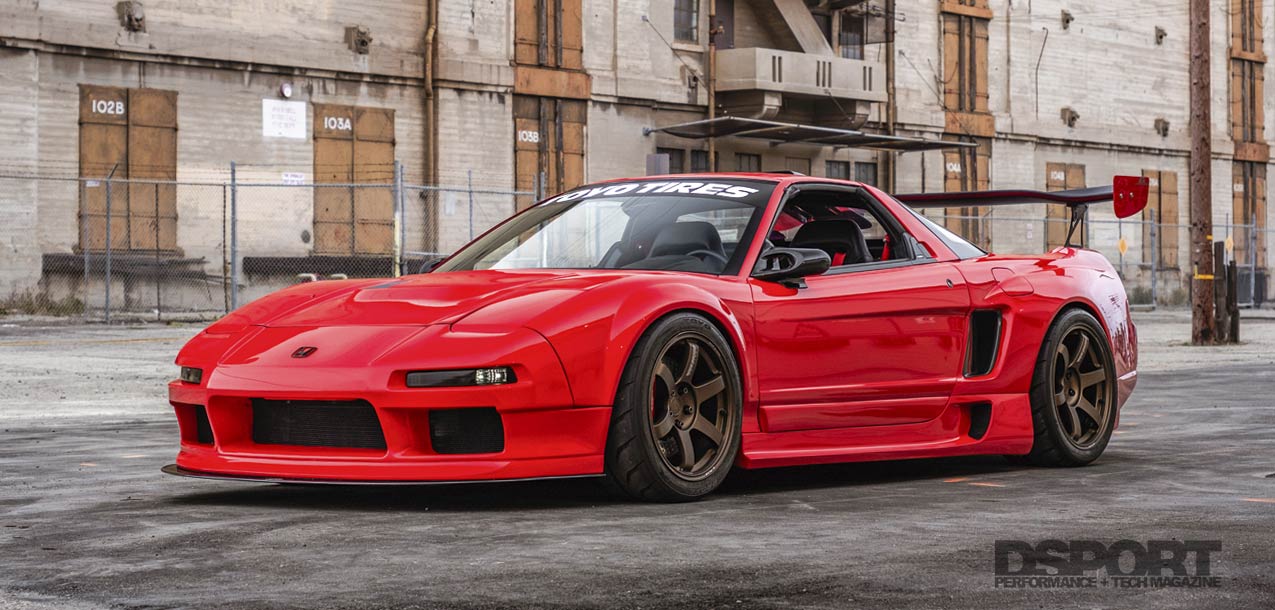
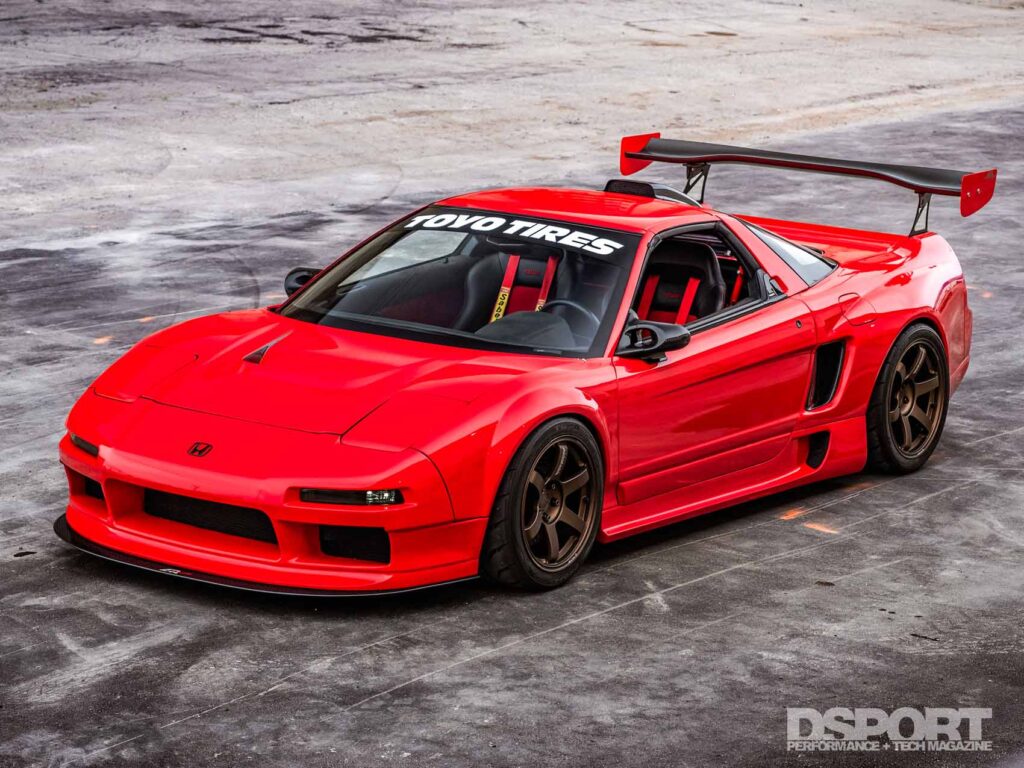
The heart of the exterior mods was an amalgam of rare off-the-shelf parts and custom bodywork to make the car look “OEM-plus.” Fenders and carbon fiber side vents from Pride Group accented a pair of Downforce TCRC side skirts. A VIS Racing carbon fiber Type R hood created the front fascia while custom JDM LED rear taillights and a duo of APR-branded carbon fiber bits showed off the rear. A rare set of Ganador mirrors tied in the remainder of the parts, but that meant only half the work was done. Pianelli stated, “When I finally found all the body parts for my build, I needed to find a body shop I would trust to put all the pieces together. I found the best body shop around; Bells Auto Sport in Huntington Beach.” Bells was responsible for the fitment and custom modifications, including the new gas filler door, and for applying the late-model Acura NSX hue – Curva Red.
 All Aluminum
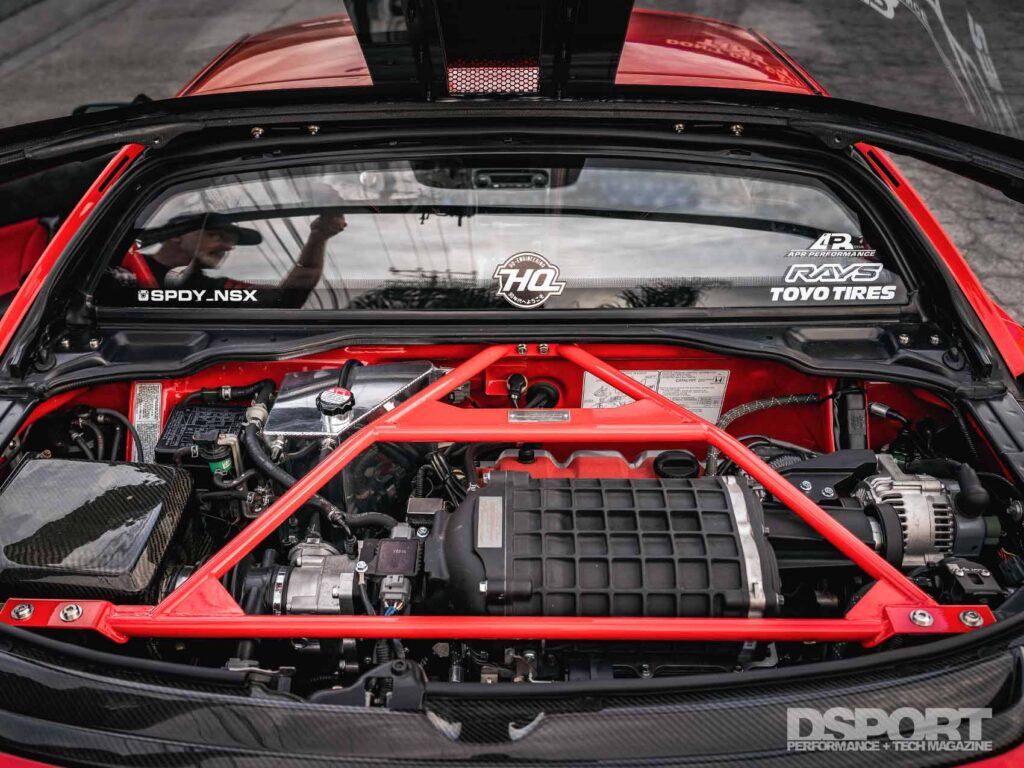
The C30A engine in stock form was Honda’s ostensible answer to power their cheaper Ferrari-fighter. Made entirely from aluminum to help keep the weight down, the V6 engine featured Honda’s variable valve timing technology and was meant to exploit the chassis’ featherweight to accent speed and handling in lieu of two additional cylinders. Still, many enthusiasts, including Pianelli, felt the car to be underpowered. In this light, Pianelli sought the advice of HQ Engineering to motivate the NSX to levels apt for its new OE-plus outerwear.
A sextet of 1.5mm-overbore Science of Speed Type-A forged pistons were mated to OEM titanium connecting rods on an OEM crankshaft, with friction-surface bearings receiving the WPC treatment. Utilizing the factory stroke length, the C30A displaced 3077.4 cc and ended up with a static compression ratio of 9.4-to-1. HQ Engineering upgraded the valvetrain with a set of Science of Speed camshafts that actuated Supertech valves and springs shrouded in titanium retainers. A multi-angle valve job improved combustion chamber efficiency while the cylinder head deck treatment helped ensure proper sealing with the OE cylinder head gaskets.
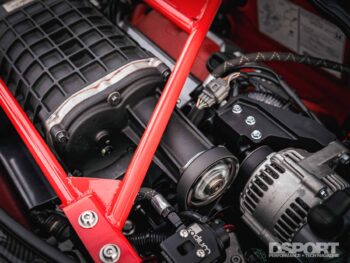
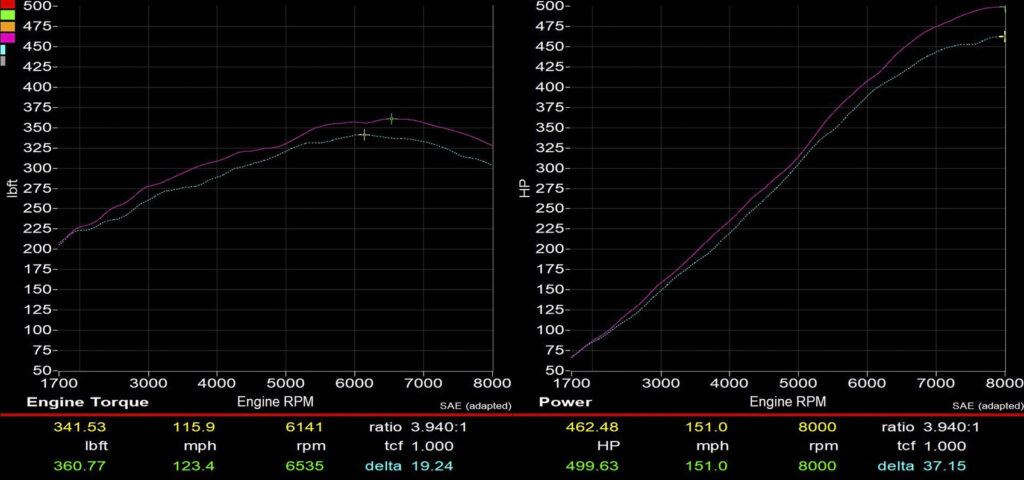
To better exploit the potential of the upgraded engine, Pianelli sourced a Science of Speed Magnuson TVS1900 supercharger. The blower was driven by a Griptec belt and pulley set and featured a supporting cast of Science of Speed induction parts: induction piping, 75mm throttle body, intake manifold and liquid-to-air intercooler. Fuel for the increased airflow was supplied by a system consisting of a Walbro 450 Lph fuel pump, Injector Dynamics 1,050 cc/min injectors, and an AEM Infinity engine management unit at the helm. The balanced, blueprinted and blown motivator was said to produce 505 wheel horsepower and 400 lb-ft torque as measured on a Dynapack 5000 dynamometer.
All The Small Things
More unsung heroes in the power-production and heart-pounding areas included an upgraded 16-liter cooling system capacity to assist the intercooler, a Comptech USA exhaust manifold to help route spent gasses and a Pride Exhaust v2 cat-back exhaust system to evacuate the gasses to the atmosphere. Engine fine-tuning was assisted by a pair of AEM X-Series wideband oxygen sensors and controllers.
Senna-Approved
World-champion F1 driver Ayrton Senna reportedly provided feedback and constructive criticism for the Honda engineers to improve the Ferrari 348-fighter. Pianelli took it a step further with a set of BC Racing coilovers wearing Swift Springs 8kg and 10kg springs for street flogging and a Stanceparts Air Cup system for Cars and Coffee driveway ingress. Filling the wheel wells were a set of RAYS Volk Racing TE37 SAGA+ wheels in an extra wide configuration wrapped in TOYO Tires R888Rs all the way around. A Science of Speed chassis brace tightened up the proverbial fifth spring. “Steering the car without power steering was a joke,” Pianelli explained. As this particular example started life devoid of power-assisted steering, Pianelli scavenged the entire power steering system from a ‘91-vintage NSX and completed the car’s total handling experience.
Inside Job
While the shell and the engine were out to play, the interior got its own spa-day treatment. Pianelli sourced an ID4Motion digital dash to complement the Pioneer double-DIN head unit utilized for its reverse-camera capability, a must for Pianelli to assist in keeping the rear clear. A set of Integra seats were sourced and recovered by New Lines Upholstery, another of Pianelli’s “Big 6” companies that were essential in making his dream a reality. New Lines refinished the remainder of the interior to match the “factory plus” aesthetic that drove Pianelli’s build. A Momo steering wheel connected the driver to the vehicle.
Formula Done
“After two years of building my NSX, I have reached what I set out to do with more horsepower, better steering, electronics and sound system and a wide body kit that brings the NSX to the 22nd century while keeping the nostalgic look from the 90s,” Pianelli concluded. “There is nothing left to do other than enjoy the ride, basically listen to the engine scream behind me like an F1 car as I’m driving down PCH.” Thanks to Pianelli’s perseverance and the sextuplet of manufacturers and service providers that helped along the way, it’s a dream realized that’s been a long time coming.